The EU is treating WhatsApp like public infrastructure for the AI wars.
By threatening to force Meta to host rival AI assistants, European regulators are stripping tech giants of their most powerful weapon: default distribution.

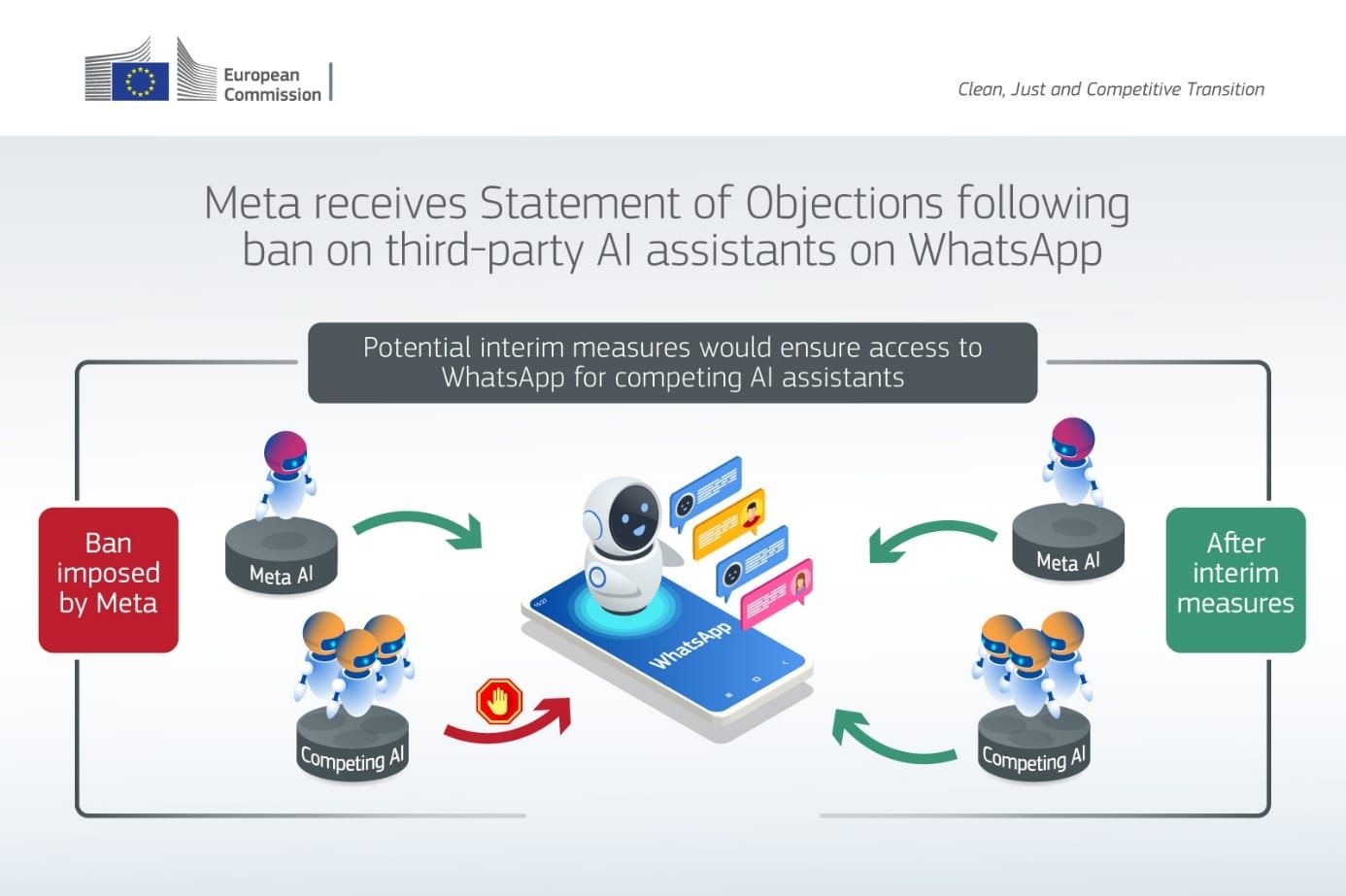
In early February 2026, the European Commission issued a stark warning to Meta: it may impose interim measures forcing WhatsApp to allow third-party AI assistants to operate directly inside the app. The EU views Meta's current policy of excluding rival models as an anti-competitive chokehold on the world's most valuable communication layer.
For the last decade, Big Tech's ultimate strategy was the "walled garden"—building a massive audience and then locking them into a proprietary ecosystem. This EU intervention follows the exact same legal playbook as the landmark 1990s Microsoft antitrust case, where regulators ruled that owning the dominant operating system did not give you the right to block competing web browsers. Today, the messaging app is the operating system, and the AI agent is the browser.
When regulators decree that a private app with two billion users must host its own competitors, the platform owners lose their ultimate advantage. They can build the house, but they can no longer lock the door.
Decouple your AI development from platform-specific dependencies. If the EU successfully forces interoperability across major messaging apps, the winning strategy shifts from building for a specific ecosystem to building portable agents that can travel wherever the user goes.
Source: European Commission