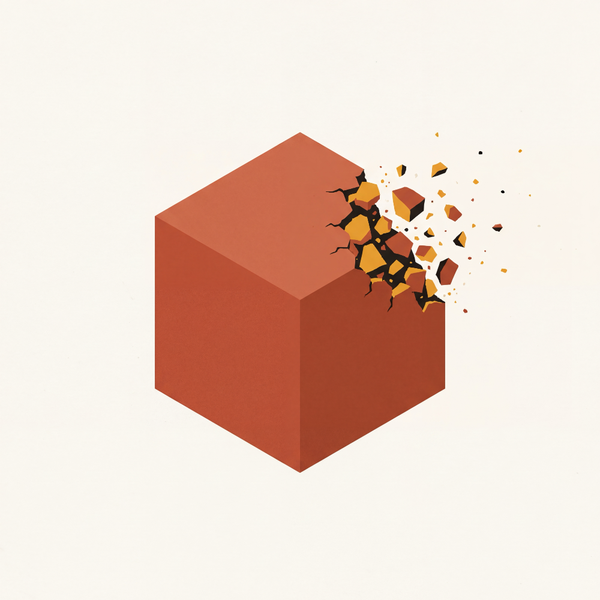
The Mess Aesthetic The cultural shift away from polished, curated perfection — and toward the raw, unedited, and honest. The clean girl aesthetic is over. The mess is the message.
The Pace Rebellion The active rejection of speed, urgency, and hustle culture — from slow living and slow fashion to people deliberately choosing less. Anti-hustle is not laziness. It is strategy.
The Honesty Boom Radical transparency as a competitive advantage. The brands, creators, and individuals earning the most trust right now are the ones showing what everyone else still hides.
The Curator Economy People and brands who choose for you — and are rewarded for their taste. The rise of the editor, the sommelier, the "I tested 50 so you don't have to" creator. Curation is the new creation.
One-Click Culture The demand for frictionless decisions. Subscriptions over shopping. Defaults over deliberation. Every click you remove is a customer you keep.
The Trust Shortcut People outsourcing judgment to algorithms, AI assistants, and recommendation engines. Not because they trust the machine — but because deciding is exhausting. AI is not the answer. It is the shortcut.
The Nostalgia Loop The cyclical return of past aesthetics, products, and feelings — not as revival but as emotional anchoring in uncertain times. Nostalgia is not about the past. It is about what the present lacks.
The Maximalist Bet Brands and creators making bold, emotional, maximalist bets — the opposite of playing it safe. Going big because people are starving for something that actually makes them feel.
Comfort as Culture Comfort food, comfort TV, "cozy" as an aesthetic category. The elevation of feeling safe from guilty pleasure to legitimate cultural value. Comfort is not retreat. It is strategy.
Micro-Fandoms The explosion of tiny, passionate communities around hyper-specific interests — and the brands learning to serve them instead of mass markets. Small is the new big.
The Parasocial Economy The growing economic and emotional power of one-sided relationships — with creators, characters, AI companions, and brands that feel like friends. Parasocial is not a flaw. It is the operating system of modern trust.
Solo but Social The rise of doing traditionally social things alone — dining, travelling, gaming, exercising — not as loneliness, but as a deliberate lifestyle choice. Solo is not lonely. Solo is free.
The Trust Deficit The measurable collapse of trust in traditional institutions — media, government, corporations, experts — and the vacuum it creates. Trust has not disappeared. It has moved.
Creator as Institution Individual creators becoming more trusted, more influential, and more economically powerful than the legacy institutions they replaced. One person with a microphone now competes with an entire newsroom.
The Local Comeback People returning to smaller, local, tangible sources of authority and commerce — local news, independent shops, community banks, the family doctor. Proximity is the new trust signal.
The Algorithm Question The tension between depending on and distrusting the AI and algorithmic systems that curate our information, make our recommendations, and increasingly do our work. Are we being replaced or augmented?
The Optimisation Obsession The drive to measure, track, and improve every aspect of the body and mind — from sleep scores to continuous glucose monitors to peptide protocols. If you cannot measure it, you cannot optimise it. And now you can measure almost everything.
Identity as Experiment Gender, neurodivergence, personality type, and even species identity as things you actively explore and construct — not fixed categories you inherit. Identity is no longer something you are given. It is something you build.
The Wellness Stack The phenomenon of people assembling a personal stack of supplements, routines, wearables, apps, and protocols — as both health practice and identity statement. Your stack is your philosophy made visible.