The Wellness Stack
The phenomenon of people assembling a personal stack of supplements, routines, wearables, apps, and protocols — as both health practice and identity statement. Your stack is your philosophy made visible.

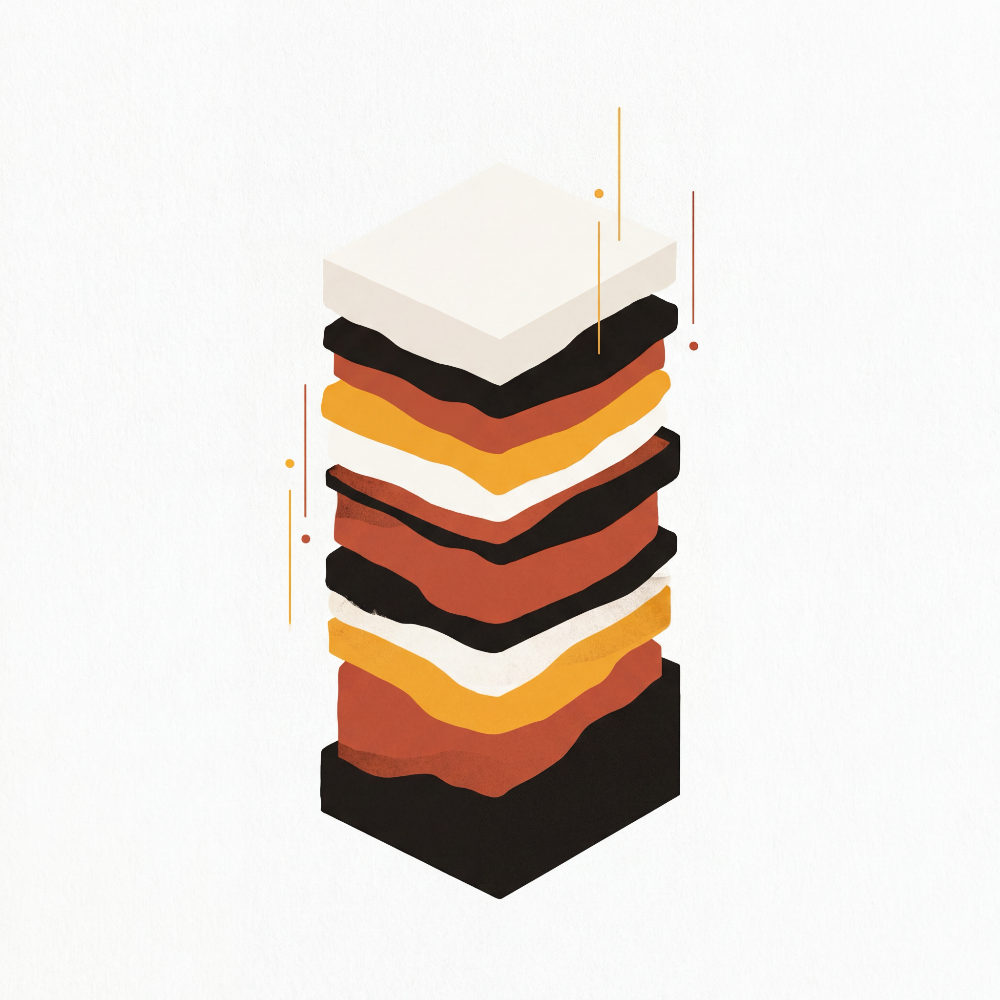
The Wellness Stack
The phenomenon of people assembling a personal stack of supplements, routines, wearables, apps, and protocols — as both health practice and identity statement. Your stack is your philosophy made visible.
The Story
A typical morning routine in 2026 looks like this: wake up, check sleep score on wearable, take a greens powder and magnesium glycinate, do ten minutes on a red light panel, log food in a tracking app, and check the continuous glucose monitor before breakfast. None of this is medical. All of it is chosen. The Wellness Stack is the trend of people assembling a personal protocol — a stack of supplements, devices, routines, and practices — that serves as both a health strategy and an identity statement.
What this is
The Wellness Stack is what happens when health and self-care become modular. People assemble a personal stack of supplements, routines, wearables, apps, and protocols — part health practice, part identity statement. Your stack says as much about who you are as your music taste. 'What's in your stack?' is a real question people ask each other.
What's driving it right now
The supplement industry reached $50 billion. Wearable health tech is mainstream. Wellness influencers share their 'morning routines' as content, and each routine is a curated stack of products and practices. The underlying behaviour: people want to feel like they are the engineer of their own health, assembling components rather than following a single doctor's prescription.
Where it's going
Stacks will become more personalised and more AI-driven. Services that analyse your blood work, genetics, or wearable data and recommend a custom protocol will replace the generic supplement aisle. The risk is that stacking becomes performative — collecting products as identity signals rather than genuine health practice. The opportunity is that personalised wellness becomes accessible to everyone, not just those who can afford a functional medicine doctor.
Three Historical Proofs
The supplement industry's growth.
Global supplement sales have grown to over $180 billion, driven by stack-building consumers who buy multiple products as a system. What it confirms: people are not buying supplements. They are buying protocols.
Wellness influencer protocols.
Creators who share their complete daily stack — every supplement, every device, every routine — generate the highest engagement in the wellness space. What it confirms: the stack itself is the content. Transparency about what you take and why is the trust signal.
Personalised nutrition services.
Companies like Zoe and Viome analyse individual biology to recommend personalised stacks. They are growing rapidly. What it confirms: the future of the wellness stack is not generic. It is individualised, data-driven, and specific to your body.
Signals of this trend in action.
Each one is anchored to a real event, a brand move, a viral moment. Published daily — timestamped, tagged, and ending with a specific So What for your work.
See all signals for "The Wellness Stack" →Part of
🧬 "My body, my lab" →Also in this undercurrent: The Optimisation Obsession · Identity as Experiment